
Kilimanjaro Training: A Practical 12-Week Preparation Guide

Introduction Kilimanjaro Training
Climbing Mount Kilimanjaro is on many travellers' bucket lists. Standing at 5,895 metres (19,341 feet), it is the highest mountain in Africa and one of the world's most famous trekking destinations.

One of the most common questions we receive at Genes Adventures is:
"How do I prepare for Kilimanjaro?"
The good news is that you do not need to be a marathon runner, elite athlete, or experienced mountaineer to climb Kilimanjaro. Every year, people from all walks of life successfully reach Uhuru Peak.
What you do need is a reasonable level of fitness, a positive mindset, and enough preparation before your climb.
This guide explains the type of fitness required for Kilimanjaro and provides a practical 12-week training programme to help you prepare.

Do You Need to Be Extremely Fit?
NO!
Kilimanjaro is a trekking mountain, not a technical climbing expedition. You do not need ropes, climbing experience, or specialised mountaineering skills.
However, you will be walking for several consecutive days, often for multiple hours at a time, while carrying a daypack and dealing with increasing altitude.
The goal of your training is not to become faster.
The goal is to improve your endurance, strengthen your legs and core, and become comfortable spending long periods on your feet.
Most healthy people can prepare successfully for Kilimanjaro with a structured training programme and a consistent approach.
Before You Start
It is important to understand that there is no single training programme that works for everyone.
Your age, current fitness level, hiking experience, available time, and personal goals will all influence your preparation.
The training schedule in this guide should therefore be viewed as a guideline rather than a strict set of rules. Feel free to adapt it to suit your own circumstances.
If you have any medical concerns or health conditions, consult your doctor before starting a new exercise programme.
What Type of Fitness Does Kilimanjaro Require?
Preparing for Kilimanjaro is not about speed. Instead, you should focus on four key areas:
Endurance: The ability to walk for several hours at a steady pace.
Leg Strength: Strong legs help you cope with long ascents and descents.
Core Stability: A strong core improves balance and reduces fatigue.
Consistency: Regular training over several weeks is far more beneficial than occasional intense workouts.
Understanding the Different Types of Training
Preparing for Kilimanjaro is not just about walking. A successful training programme should include a combination of endurance, strength and hill-climbing preparation.
To keep things simple, we have divided the training programme into four different types of exercises. Each one serves a specific purpose and together they help prepare your body for the demands of climbing Africa's highest mountain.
1. Regular Walks
Regular walks improve your overall fitness and help build a consistent exercise routine. They are the foundation of your training programme and help your body become accustomed to spending more time on your feet.
2. Long Walks
Long walks are designed to build endurance. They gradually prepare your body for the reality of walking for several hours a day on Kilimanjaro, often over multiple consecutive days.
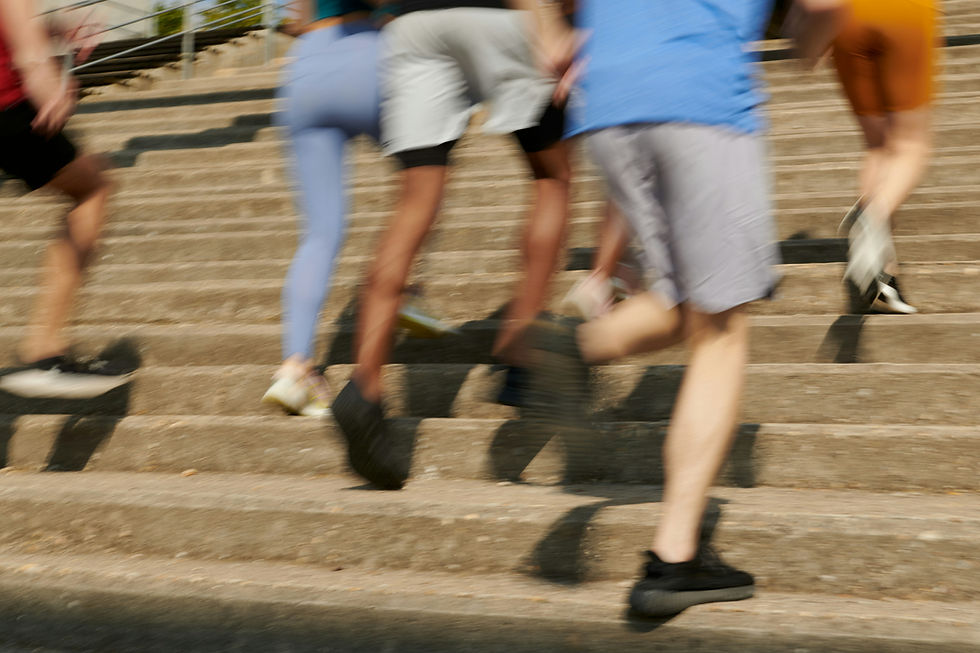
3. Stair Training
Most people do not have mountains on their doorstep. Stair training is an excellent way to simulate uphill climbing and strengthen the muscles used during ascents and descents.
4. Strength Training
Strength training helps build stronger legs, improve balance and increase core stability. This can reduce fatigue, improve posture and make both uphill and downhill sections more comfortable.
Now let's take a closer look at each training type and how to incorporate it into your preparation.

Regular Walks: Building Your Foundation
Regular walks form the foundation of your Kilimanjaro preparation.
The purpose is to improve your overall fitness and get your body accustomed to spending time on your feet.
Guidelines:
Walk at a comfortable but steady pace.
You should still be able to hold a conversation while walking.
Wear the hiking boots or shoes you plan to use on Kilimanjaro.
No backpack is required during the first four weeks.
From Week 5 onwards, begin carrying a small daypack weighing 3 to 5 kg.
Aim for:
45 to 90 minutes per walk
3 walks per week
Long Walks: Developing Endurance
Long walks are one of the most important parts of your preparation.
These walks help simulate the physical demands of a typical day on Kilimanjaro.
Guidelines:
Walk at a comfortable pace.
Focus on time rather than distance.
Bring water and snacks.
Take short breaks when needed.
Carry a daypack from Week 5 onwards.
The objective is not speed. The objective is spending several hours comfortably on your feet.
Aim for:
One long walk each week
Gradually increase from 2 hours to 7–8 hours
Stair Training: Simulating the Climb
Many people preparing for Kilimanjaro do not have access to mountains.
Stair training is an excellent alternative and helps strengthen the muscles used during uphill climbing.
Guidelines:
Use stairs at home, work, a stadium, apartment building or shopping centre.
Walk up at a steady pace.
Walk down carefully to reduce stress on your knees.
Start without a backpack.
From Week 5 onwards, carry a backpack weighing 3 to 5 kg.
Focus on time spent climbing rather than counting individual steps.
Aim for:
Two stair sessions per week
Gradually increase from 10 minutes to 45 minutes

Strength Training: Building Strong Legs and Core Stability
You do not need a gym membership to prepare for Kilimanjaro. Simple bodyweight exercises are often enough. Focus on exercises that strengthen the legs and core.
Recommended exercises:
Squats - Strengthens thighs and glutes.
Step-Ups - Mimics uphill walking.
Calf Raises - Strengthens lower legs and ankles.
Planks - Improves core stability and posture.
Aim for:
Two sessions per week
20 to 30 minutes per session
The 12-Week Kilimanjaro Training Plan
Week | Regular Walks | Long Walk | Stair Training | Strength Training |
1 | 3 x45 min | 2 hrs | 2 x 10 min | 2 x 20 min |
2 | 3 x 50 min | 2.5 hrs | 2 x 12 min | 2 x 20 min |
3 | 3 x 60 min | 3 hrs | 2 x 15 min | 2 x 25 min |
4 | 3 x 60 min | 3 hrs | 2 x 15 min | 2 x 25 min |
5 | 3 x 60 min + 3 kg backpack | 3.5 hrs | 2 x 20 min | 2 x 25 min |
6 | 3 x 75 min + 3 kg backpack | 4 hrs | 2 x 20 min | 2 x 25 min |
7 | 3 x 75 min + 5 kg backpack | 4.5 hrs | 2 x 25 min | 2 x 30 min |
8 | 3 x 90 min + 5 kg backpack | 5 hrs | 2 x 25 min | 2 x 30 min |
9 | 3 x 90 min + 5 kg backpack | 5.5 hrs | 2 x 30 min | 2 x 30 min |
10 | 3 x 90 min + 7 kg backpack | 6 hrs | 2 x 35 min | 2 x 30 min |
11 | 3 x 90 min + 7 kg backpack | 6 - 7 hrs | 2 x 40 min | 2 x 30 min |
12 | 3 x 90 min + 7 kg backpack | 7 - 8 hrs | 2 x 45 min | 2 x 30 min |
Remember that this training plan is intended as a guideline. Feel free to adjust the duration, intensity and frequency according to your current fitness level, available time and personal goals.

Additional Preparation Tips
Even the best training programme cannot prepare you for every aspect of a Kilimanjaro climb.
Small details such as properly breaking in your hiking boots, staying hydrated and becoming familiar with your equipment can make a significant difference to your overall experience on the mountain.
The following tips will help you arrive in Tanzania feeling confident, comfortable and well prepared for the adventure ahead:
Break In Your Hiking Boots: Never arrive in Tanzania with brand-new hiking boots.
Wear them during your training walks to avoid blisters and discomfort on the mountain.
Train With Your Daypack: Your daypack may contain water, snacks, extra clothing, sunscreen and personal items. Practising with a backpack helps your body become accustomed to carrying weight for extended periods.
Stay Hydrated: Develop good hydration habits before your climb. Proper hydration plays an important role in both training and altitude adaptation.
Practise Consecutive Walking Days: As your fitness improves, try walking on consecutive days.
This helps prepare your body for the multi-day nature of a Kilimanjaro climb.
Listen To Your Body: Training should challenge you, but it should not cause injury.
Increase distances and intensity gradually.

Train Together Whenever Possible
If you are climbing Kilimanjaro as part of a group, try to schedule at least one long walk together every month during your preparation.
Training together helps build team spirit, improves group dynamics and allows everyone to get to know each other's strengths and challenges before arriving in Tanzania.
These training walks can also be a great opportunity to test equipment, share experiences, motivate one another and discuss expectations for the climb ahead.
Remember, reaching Uhuru Peak is a personal achievement, but the journey itself is often a team effort. The stronger your group bond before the climb, the more enjoyable and supportive the experience is likely to be on the mountain.
Common Training Mistakes
Even with the best intentions, many climbers make avoidable mistakes during their preparation.
Understanding these common pitfalls can help you train more effectively and arrive on the mountain in the best possible condition:
Starting Too Late: Twelve weeks is a good minimum. If possible, start earlier.
Doing Too Much Too Soon: Gradual progression is safer and more effective.
Ignoring Strength Training: Strong legs and a stable core will help you throughout your climb.
Focusing Only On Speed: Kilimanjaro is not a race. Endurance matters far more than pace.
Training In New Gear: Always test your boots, socks, backpack and clothing before departure.

Final Thoughts
Preparing for Kilimanjaro does not require extreme fitness or complicated training programmes.
What matters most is consistency.
A few months of regular walking, stair climbing and basic strength training can make a significant difference to your comfort, confidence and enjoyment on the mountain.
Remember that this training plan is intended as a guideline. Feel free to adjust it according to your personal circumstances and fitness level.
The most successful climbers are not always the strongest or the fastest.
They are the ones who arrive well prepared, pace themselves, and stay committed to their goal.
If you would like advice on choosing the right Kilimanjaro route or preparing for your climb, the team at Genes Adventures is always happy to help.


Comments